EN
EN ES
ESQR Code Use Cases That Actually Drive Results
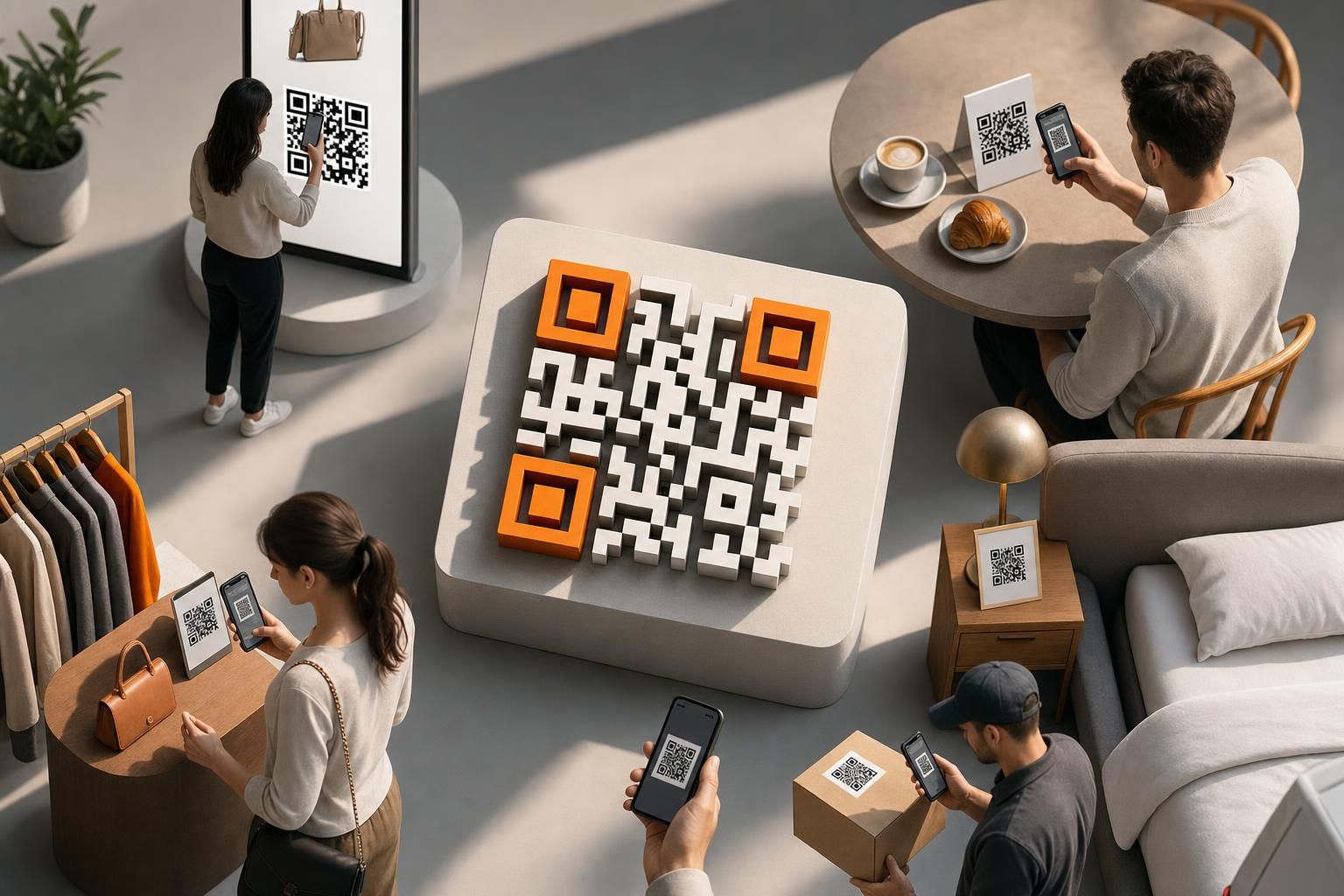
QR codes have moved well past novelty status. Marketers, operators, and product teams use them to close the gap between physical touchpoints and digital experiences, and the range of applications keeps growing. If you have ever wondered where QR codes genuinely earn their place, this breakdown covers the use cases worth paying attention to.
Why QR Codes Are Worth Taking Seriously
A QR code is a scannable link printed, displayed, or embedded anywhere a URL cannot be typed. That sounds simple, but the implication is significant: any physical surface becomes an interactive touchpoint. A poster becomes a landing page. A product label becomes an instructional video. A business card becomes a lead capture form.
The practical value increases further when you use dynamic QR codes instead of static ones. A static QR code bakes its destination into the code itself. Once it is printed, the destination is permanent. A dynamic code stores the destination on a server, so the printed code is really a pointer. You can update where it points at any time, even after the code has already been printed on signage, packaging, or cards.
Platforms like tmgo.to let you generate static or dynamic QR codes with color customization and a center-logo overlay, track scan counts, and re-point dynamic codes to a new destination whenever your campaign or content changes. That combination of flexibility and measurement is what makes QR codes genuinely useful for professional work.
QR Code Use Cases Worth Knowing
1. Print and Out-of-Home Advertising
Print ads, billboards, flyers, and direct mail all face the same problem: a reader who wants to act has to remember your URL, type it correctly, and hope they do so before they forget. A QR code removes that friction entirely. The reader scans, and they are on your landing page or offer within seconds.
Dynamic codes are especially useful here because campaign destinations change. A seasonal promotion ends, a landing page URL gets updated, or the offer rotates. With a dynamic QR code, the printed material stays the same while the destination updates behind the scenes. No reprinting required.
2. Product Packaging
Packaging real estate is limited, and brands routinely use QR codes to extend what they can communicate without cluttering the label. Common uses include:
- Linking to full ingredient or nutrition details
- Providing assembly or usage instructions
- Directing customers to warranty registration
- Sharing sourcing or sustainability information
- Driving buyers toward a reorder page or a complementary product
Because the QR code on packaging is often printed in bulk, using a dynamic code gives brands the option to update that destination page without touching the physical product.
3. Restaurants and Hospitality
The restaurant industry adopted QR codes widely for digital menus, and the use cases have expanded from there. Menus are the obvious starting point: a table card or a sticker on the table links to a PDF or a live web menu that can be updated without reprinting anything.
Beyond menus, hospitality teams use QR codes to:
- Link to reservation or waitlist systems
- Drive customers to review pages
- Distribute loyalty program sign-up links
- Share Wi-Fi credentials (encoded directly into the code)
- Provide event schedules or daily specials that update frequently
A dynamic QR code on a table tent means the destination can change by meal service, season, or promotion without swapping out any physical materials.
4. Events and Conferences
Event organizers print thousands of materials: badges, programs, signage, swag. QR codes on any of those materials can connect attendees to session schedules, speaker bios, slide decks, networking apps, or feedback forms.
For exhibitors and sponsors, a QR code on a booth display or handout is a reliable way to drive traffic to a specific landing page without relying on attendees to remember a URL. Because event details change frequently up to and during the event itself, dynamic codes give organizers the ability to point attendees to the most current version of any resource.
Lead capture at events is another strong use case. A QR code linked to a short form can replace badge scanning equipment for smaller events, collecting name and email with a timestamped consent record.
5. Business Cards and Professional Networking
A business card has room for a name, a title, contact details, and maybe a logo. A QR code on that same card can link to a full professional profile, a portfolio, a scheduling link, or a link-in-bio page with everything a new contact might need.
This is where a branded short link or a Creator Page at tmgo.to becomes particularly useful. Instead of linking to a static PDF or a LinkedIn profile you cannot update, you link to a page you control and can update at any time. The QR code on the card stays the same; the page behind it evolves with your work.
6. Retail and In-Store Experiences
Physical retail competes with online shopping partly on experience, and QR codes help store teams add information and interactivity without requiring additional staff at every product display. Practical in-store uses include:
- Linking to extended product specifications or comparison guides
- Displaying customer reviews for a specific product
- Showing video demonstrations or tutorials
- Offering a digital coupon or loyalty reward
- Providing a way to purchase online if the item is out of stock in-store
For retail brands managing multiple locations or SKUs, dynamic QR codes make it possible to update any of these destinations centrally without coordinating a reprint across every location.
7. Real Estate
Property listings are increasingly competitive, and real estate agents use QR codes on yard signs, flyers, and window cards to give interested buyers instant access to full listing details, photo galleries, virtual tours, or scheduling links for showings.
A dynamic code on a yard sign is particularly practical. When a listing closes and the sign goes back into the agent's inventory, the same QR code can be re-pointed to the agent's current active listings rather than sitting dead. The physical sign keeps its value.
8. Marketing Campaigns with Attribution
One of the most underused aspects of QR codes is their ability to tell you something about your audience. Every scan is a data point. When you track scans by count, date, and device, you can understand which physical placements generate the most engagement, which campaigns convert, and how scan behavior changes over time.
Platforms like tmgo.to pair QR code generation with scan tracking and unique-scan counts, so teams get a cleaner picture of actual reach rather than just impressions. Combined with branded tmgo.to short links on the destination side, attribution becomes much cleaner across both offline and online channels.
For agencies or teams running multi-channel campaigns, having each campaign element (a print ad, a mailer, an event handout) point to its own tracked QR code makes it possible to compare performance across placements with real data.
9. Internal Operations and Asset Management
QR codes are useful well outside customer-facing marketing. Organizations use them internally for:
- Asset tagging: equipment, inventory, or documents with QR codes that link to maintenance records or check-out logs
- Facility wayfinding: QR codes on doors, rooms, or floors that link to maps or directories
- Onboarding materials: printed employee handbooks or workspace guides with QR codes linking to the latest digital version
- Safety procedures: QR codes posted near equipment that link to current operating instructions or emergency protocols
Internal use cases benefit especially from dynamic codes, because procedures and documentation change regularly and keeping printed materials current is expensive.
10. Social Media and Creator Content
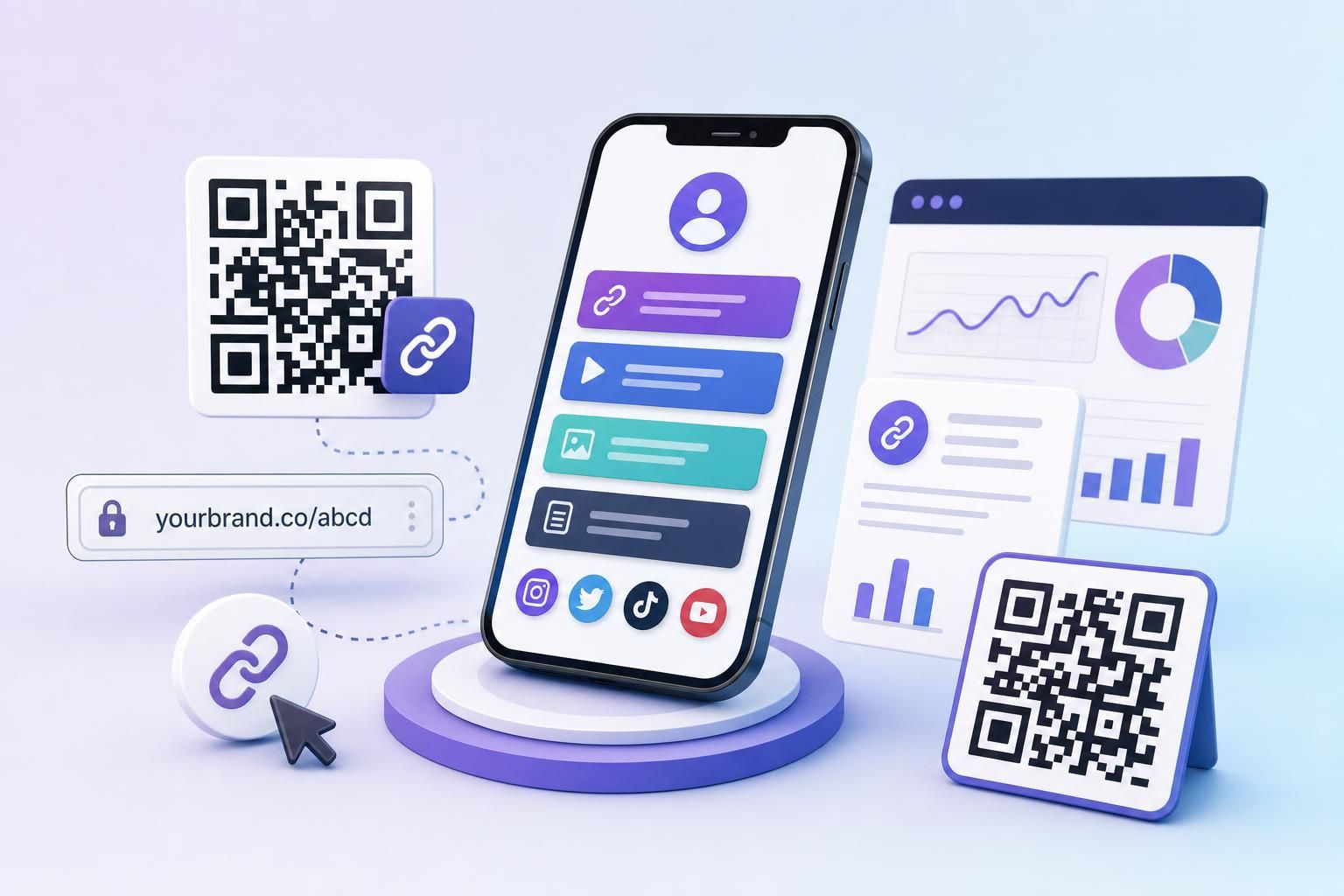
Creators, coaches, and small businesses often need a single link that routes followers to multiple destinations: a newsletter, a latest post, a booking link, a product. A QR code linked to a branded link-in-bio page covers all of that in a single scan.
With a Creator Page on tmgo.to, the page lives at a handle like tmgo.to/@yourname and can include custom links, a featured drop, themes, and a lead capture form. The downloadable QR code for that page means the same destination is accessible from physical printed materials, digital graphics, or presentations without needing to manage separate links for each channel.
Choosing Between Static and Dynamic QR Codes
Not every use case needs a dynamic code. If the destination will never change, a static QR code is perfectly adequate and slightly simpler to generate. A link to a permanent resource, a fixed Wi-Fi credential, or a one-time event pass are all fine candidates for static codes.
Dynamic codes make more sense when:
- The destination might change after printing
- You want to track scan volume and behavior
- The code appears on materials with a long physical lifespan (signage, packaging, branded merchandise)
- You need the flexibility to run A/B tests or swap seasonal promotions
The cost difference between static and dynamic is generally small, and the added flexibility of a dynamic code tends to pay for itself the first time you avoid a reprint.
Making QR Codes Work Harder
A QR code on its own is just a bridge. The work happens on both sides: the physical placement has to attract a scan, and the destination has to deliver something worth the tap.
A few practices that generally hold up well:
Keep the destination mobile-first. Nearly all QR code scans happen on a phone. A destination page that loads slowly or displays poorly on mobile loses the scan immediately.
Brand the code when possible. A generic black-and-white QR code gets scanned, but a code with your brand colors and a centered logo signals that the scan leads somewhere intentional. Customization increases scan confidence.
Make the call to action obvious. A QR code sitting alone on a surface without context gives the scanner no reason to act. A short label like "Scan for the full menu" or "Scan to book" removes ambiguity and increases conversion.
Track, then adjust. If you are using tracked QR codes, review the scan data regularly. Low-performing placements can be repositioned, and high-performing ones can inform where you invest in future campaigns.
Putting It Together
QR codes are practical tools for bridging the gap between physical materials and digital destinations, and the value compounds when you pair them with dynamic destination management, scan tracking, and branded short links. The use cases above cover a wide range of industries and objectives, but the underlying logic is consistent: remove friction for the person scanning, give yourself the flexibility to update destinations without reprinting, and measure what actually works.
If you are ready to start generating dynamic QR codes and tracking their performance, tmgo.to offers QR code creation with color customization, logo overlays, dynamic re-pointing, and scan analytics alongside branded short links and Creator Pages for managing all your links in one place.